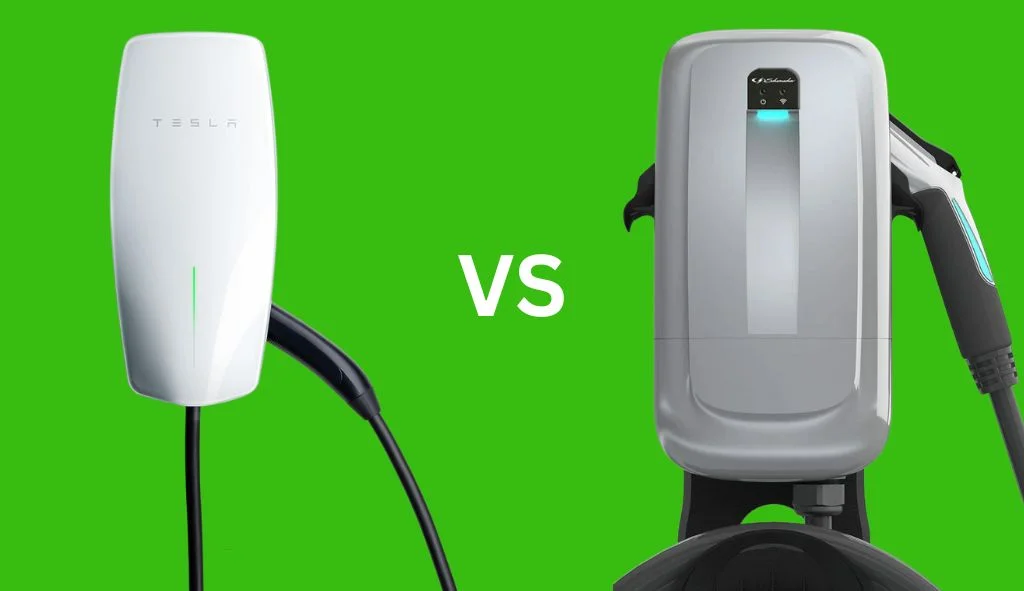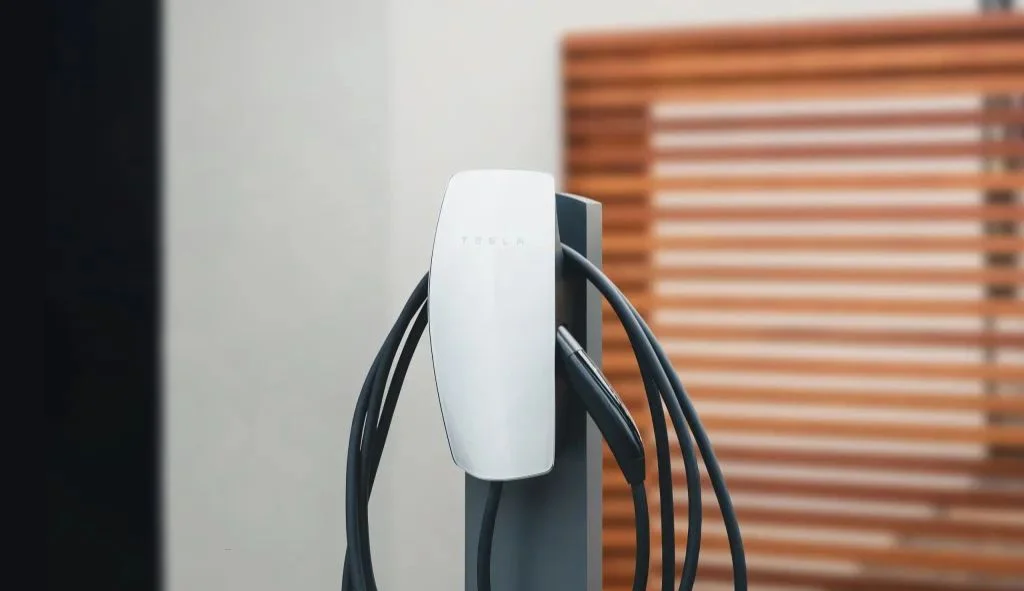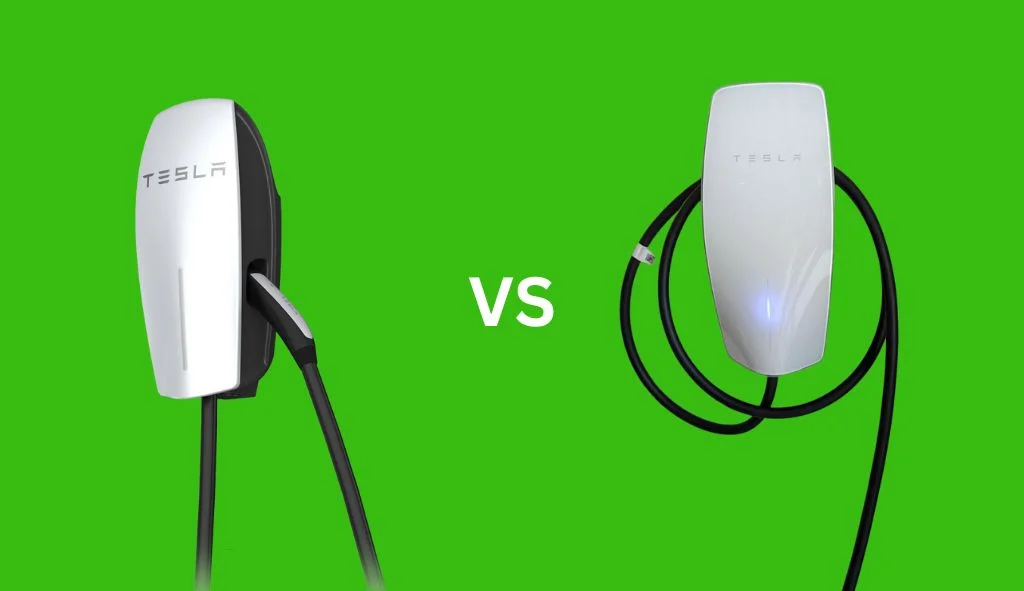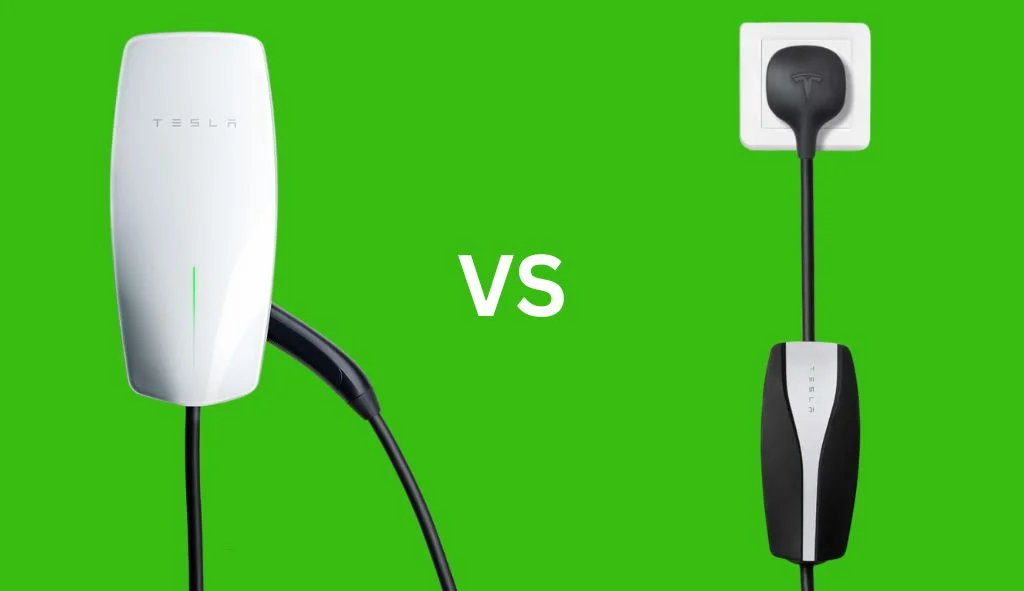
The Tesla Mobile Connector is a portable $300 charging cable that plugs into an outlet and delivers up to 32 A, about 30 miles of range per hour on a NEMA 14-50. The Wall Connector is a $585 hardwired unit that delivers up to 48 A, about 44 miles per hour. For cars that can use 48 A the Wall Connector is about 47% faster; for base Model 3 and Model Y trims, which stop at 32 A, there is no speed difference at all.
That last point is the one most comparisons skip, and it changes the decision for a lot of households. The rest of this page covers what each one really costs installed, how much range each puts back overnight, and the situations where one clearly beats the other.
How much range each adds in one night
Miles of range per hour is the number Tesla publishes, so it is the fairest way to compare. Multiply by the hours your car is parked and plugged in.

| Setup | Max current | Model 3 | Model Y |
|---|---|---|---|
| Wall Connector, 60 A breaker | 48 A | 44 | 44 |
| Mobile Connector, NEMA 14-50 or 6-50 | 32 A | 30 | 27 |
| Mobile Connector, NEMA 14-30 or 10-30 | 24 A | 22 | 21 |
| Mobile Connector, NEMA 6-20 | 16 A | 15 | 14 |
| Mobile Connector, NEMA 5-20 (120 V) | 16 A | 7 | 7 |
| Mobile Connector, NEMA 5-15 (120 V) | about 12 A | 2 to 3 | 2 to 3 |
| Setup | Model S | Model X |
|---|---|---|
| Wall Connector, 60 A breaker | 41 | 35 |
| Mobile Connector, NEMA 14-50 or 6-50 | 27 | 23 |
| Mobile Connector, NEMA 14-30 or 10-30 | 21 | 17 |
| Mobile Connector, NEMA 6-20 | 14 | 12 |
| Mobile Connector, NEMA 5-20 (120 V) | 7 | 6 |
| Mobile Connector, NEMA 5-15 (120 V) | 2 to 3 | 2 to 3 |
Figures are miles of range per hour from Tesla's support pages. Tesla's own table shows 4 to 6 mi per hour on a NEMA 5-15, but the same page, the Tesla charging page and the Shop all say "up to 3", so we use 2 to 3. Tesla's NEMA adapter Shop page lists slightly different 14-50 figures for S, X and Y; treat "up to 30 miles per hour" as the headline.
Worked examples
- 40 mile round-trip commute, Model Y on a 14-50: 40 / 27 = about 1.5 hours to put it back. The Mobile Connector is plenty.
- 40 mile commute on a plain 120 V outlet: 40 / 3 = about 13 hours. Workable on weeknights if the car sits 13 hours, but a long weekend trip will drain it faster than the outlet refills it.
- 90 miles a day, Model Y Long Range: 90 / 27 = 3.3 hours on a 14-50, 90 / 44 = about 2 hours on a Wall Connector. Either fits inside a night; the Wall Connector leaves more headroom for a missed charge.
- Two cars, one circuit: this is where the Wall Connector wins outright, because Gen 3 units can share one site's capacity and a Mobile Connector cannot.
For full 10% to 90% times by battery size, our page on how long it takes to charge a Tesla has the tables.
The base-trim exception
Tesla's onboard charger sets the ceiling, not the wall unit. Current base Model 3 and base Model Y trims accept a maximum of 32 A, 7.7 kW, and add about 30 miles per hour whatever they are plugged into. A Mobile Connector on a 14-50 already gives them that. Tesla's own installer page makes the same point: a 50 A outlet with the Mobile Connector delivers 32 A, matching the Model 3 RWD's maximum.
So if you drive a base trim (for example a 2026 Model 3 Standard), a Wall Connector buys app scheduling, a fixed cable and resale appeal, not speed. Tap the lightning bolt on the touchscreen to see your car's maximum current before deciding. Long Range, Premium and Performance trims, Model S, Model X and Cybertruck take 48 A and do charge faster on a Wall Connector. Our guide to Tesla charger amps lists each setting.

What the Mobile Connector is, and what is in the box
The current unit is the Gen 3 Mobile Connector. It arrived with Cybertruck, looks like a miniature Wall Connector with a vertical green light, and replaced the older Gen 2, with the price rising from $275 to $300. As of October 13, 2026, the Tesla Shop lists it at $300 and out of stock, with purchase limited to Tesla account holders with a vehicle.
In the box:
- Mobile Connector with a 20 ft cable
- NEMA 5-15 adapter (standard 120 V household outlet)
- NEMA 14-50 adapter (240 V, 50 A outlet)
- Storage bag and manual
Tesla sells six more adapters separately for $35 to $45 each: NEMA 5-20, 6-15, 6-20, 10-30, 14-30 and 6-50. There is no Tesla adapter for the TT-30 RV outlet; only third-party ones exist. The Shop lists these as "Gen 2 NEMA adapters"; Tesla does not say on the Mobile Connector page whether every Gen 2 adapter fits the Gen 3 unit, so check the listing for your connector before ordering.
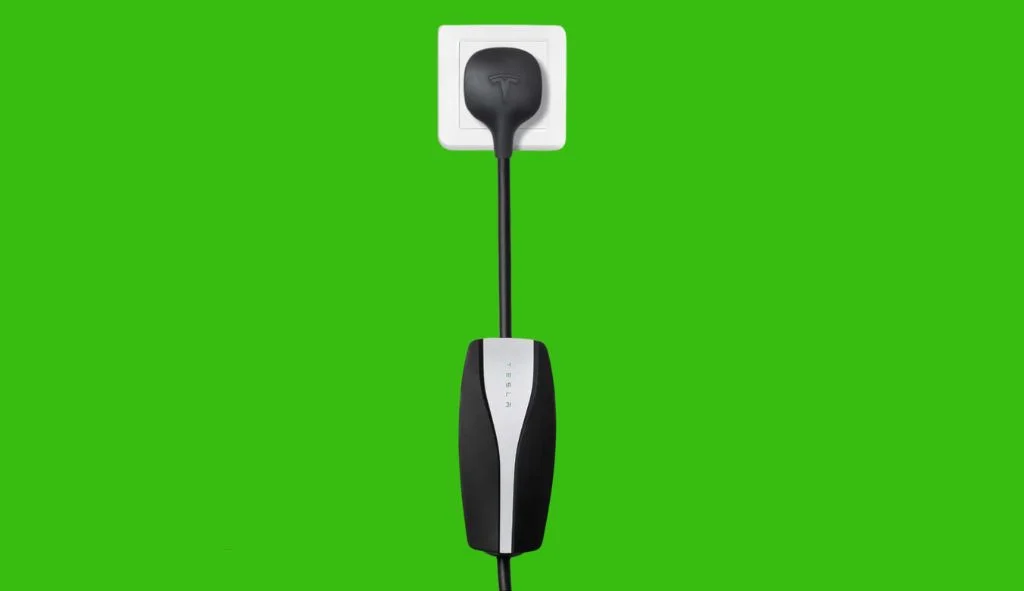
The Gen 3 Mobile Connector has one trick the Wall Connector does not: paired with Tesla's $80 Outlet Adapter, it turns a Cybertruck or a 2025-or-later Model Y Premium or Performance into a power source with two 110 V outlets, up to 20 A and about 2,400 W in total. Tesla checks the VIN for eligibility.
New cars no longer include it
Tesla dropped the Mobile Connector from new US deliveries for orders from late April 2022, so a 2022 Model Y may or may not have one depending on its order date. Every Foundation Series Cybertruck shipped with the Gen 3 unit. The J1772 adapter for public chargers is still in every box. Our page on what comes in the box with a new Tesla has the details.
What each setup really costs
This is where the "Mobile Connector is cheaper" assumption falls apart for many homes.
| Setup | Hardware | Installation (Tesla estimate) | Total |
|---|---|---|---|
| Mobile Connector on an existing approved outlet | $300 | $0 | $300 |
| Mobile Connector plus a new 240 V outlet | $300 | $750 to $1,500 | $1,050 to $1,800 |
| Wall Connector, typical run | $585 | $750 to $1,500 | $1,335 to $2,085 |
Tesla quotes the same $750 to $1,500 for installing a new 240 V outlet as for installing a Wall Connector, because most of the cost is the circuit: the breaker, the wire run, the permit and the electrician's time. Once you are paying for a new circuit anyway, the difference between the two setups is the $285 gap in hardware.

The outlet route has two more costs that Tesla's estimate does not spell out:
- GFCI protection. Under the 2020 and 2023 National Electrical Code, section 210.8(A), 240 V receptacles in garages and accessory buildings need GFCI protection, and a 50 A GFCI breaker costs much more than a standard one. Many owners also report nuisance trips when an EV charger with its own ground-fault protection is plugged into a GFCI circuit, though we have not found a primary source quantifying it. Your inspector decides which code edition applies.
- Outlet wear. Cheap receptacles were not designed for hours of high current every night or for being plugged and unplugged often. Ask for an industrial-grade 14-50 if you go this way.
A hardwired Wall Connector is not a receptacle, so the GFCI receptacle rule does not apply, and it has its own built-in CCID20 protection. Our NEMA 14-50 outlet comparison goes deeper on that choice, and the installation cost guide covers panel upgrades and long runs. The federal 30C credit no longer helps either way: it ended for chargers placed in service after June 30, 2026.
Day-to-day differences
| Wall Connector | Mobile Connector | |
|---|---|---|
| Plugging in | Grab the handle, plug in | Same, once the adapter is plugged into the outlet |
| Cable | 24 ft, stays on the wall | 20 ft, often left plugged in at home anyway |
| Schedules and history | Tesla app, 12 months of sessions | Car's own charging schedule; no charger session log |
| Firmware updates | Automatic over Wi-Fi | None documented |
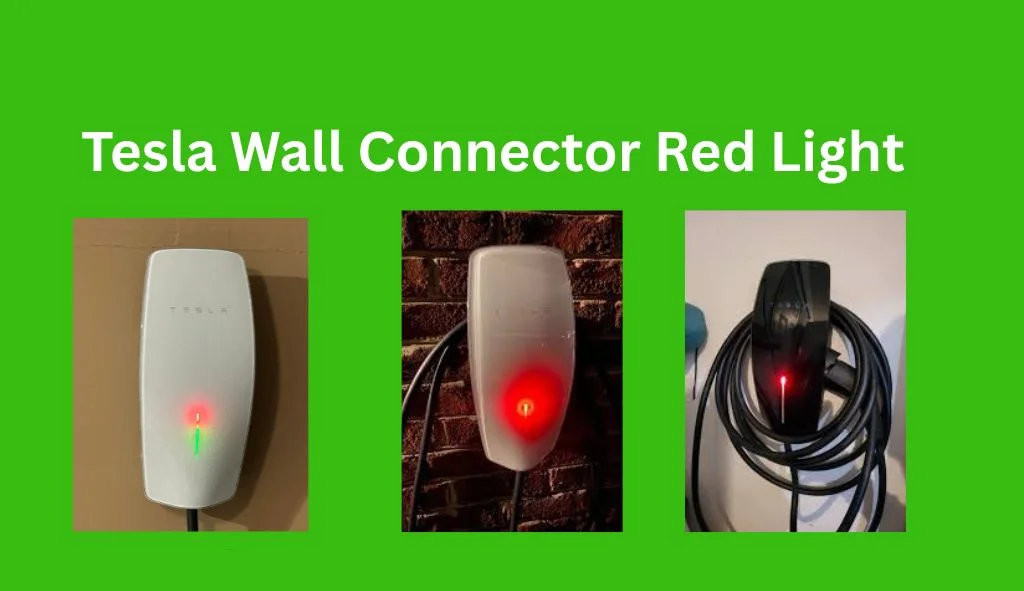
| Status lights | Light bar with red fault codes | Lights on the control box; unplug and replug to reset |
| Warranty | 48 months residential | Not stated on Tesla's product page |
| Moving house | Electrician disconnects it | Unplug and take it |
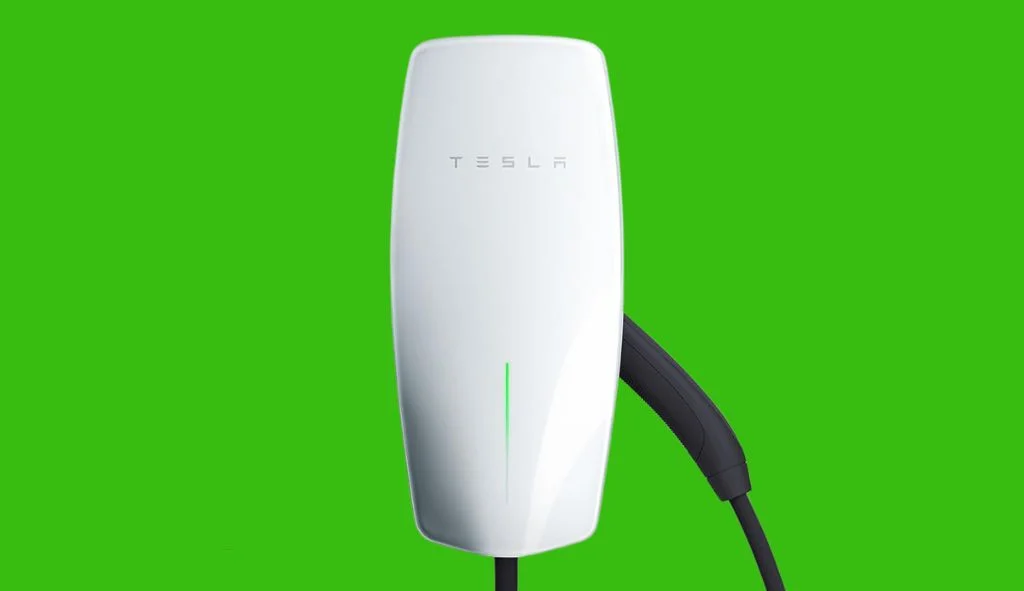
A common setup is both: the Wall Connector on the garage wall and the Mobile Connector in the trunk for visits to family or a vacation rental. If you only buy one and you rent, the portable option is the obvious pick.
Which one fits your situation
| Your situation | Pick | Reason |
|---|---|---|
| Renting, landlord allows a plug-in charger | Mobile Connector | Leaves with you; no hardwiring |
| You already have a NEMA 14-50 in the garage | Mobile Connector | Up to 30 mi per hour for $300 |
| Base Model 3 or base Model Y | Mobile Connector on a 14-50 | Same 32 A as a Wall Connector would give |
| Long Range, Premium, Performance, S, X or Cybertruck, long daily miles | Wall Connector | 48 A, about 44 mi per hour |
| Two EVs on a limited panel | Wall Connectors with power sharing | Splits one circuit's capacity safely |
| New circuit needed anyway | Wall Connector | Same install cost, faster, no GFCI receptacle issue |
| Mostly short trips, only a 120 V outlet | Mobile Connector on 120 V | 2 to 3 mi per hour still covers short daily driving |
If you have no 240 V option at all, our guide on how to charge a Tesla at home without a Wall Connector shows how far a regular outlet can go.
What owners ask about the Mobile Connector
What is a Tesla Mobile Connector?
It is Tesla's portable charging cable: a 20 ft cord with a control box and a Tesla (NACS) handle on one end and a socket for plug adapters on the other. It ships with NEMA 5-15 and NEMA 14-50 adapters and a storage bag, and charges at up to 32 A on 240 V. As of October 2026 it costs $300 on the Tesla Shop.
Does a new Tesla come with a Mobile Connector?
Not in the US since April 2022, when Tesla removed it from the standard equipment list and cut its price. Every Foundation Series Cybertruck was an exception and came with the Gen 3 Mobile Connector. Check your own order page for what is in the box; the J1772 adapter for public chargers is still included with every Tesla.
Can I use an extension cord with the Mobile Connector?
We advise against it. Every extra plug and socket joint adds resistance, and a charging car draws its full current for hours, so the joint heats up. The Mobile Connector even has status codes for a hot wall plug. If the cable will not reach, have an electrician add an outlet closer to where you park.
How many amps does the Tesla Mobile Connector draw?
It depends on the adapter. Tesla lists 32 A for NEMA 14-50 and 6-50, 24 A for 14-30 and 10-30, 16 A for 6-20 and 5-20, and 12 A for 6-15. On a regular NEMA 5-15 household outlet it draws about 12 A at 120 V. You can lower the current from the car's charging screen if a circuit is shared.
Is the Mobile Connector good enough as my only home charger?
For many drivers, yes. On a NEMA 14-50 it adds up to about 30 miles of range per hour, so a 40 mile commute takes under two hours to replace. Tesla itself suggests it suits owners driving under 30 to 40 miles a day on a regular outlet. Drivers with two EVs or long daily mileage get more from a Wall Connector.
What is the difference between the Gen 2 and Gen 3 Mobile Connector?
The Gen 3 is the current model. It arrived with Cybertruck, looks like a small Wall Connector with a vertical green light, and replaced the Gen 2, with the price going from $275 to $300. Both top out at 32 A. With Tesla's $80 Outlet Adapter, the Gen 3 can power household devices from a compatible Cybertruck or 2025 and later Model Y Premium or Performance.
Sources
- Tesla support: Mobile Connector adapters and charge rates, tesla.com
- Tesla Shop: Mobile Connector, shop.tesla.com
- Tesla support: home charging installation estimates, tesla.com
- Tesla support: Wall Connector charging speeds, tesla.com
- Tesla Shop: NEMA adapters, shop.tesla.com
- Tesla Model Y service manual: Mobile Connector output, service.tesla.com
- InsideEVs: Mobile Connector no longer standard (2022), insideevs.com
- Not a Tesla App: Gen 3 Mobile Connector with Powershare, notateslaapp.com
- IAEI: NEC 210.8 GFCI requirements, iaeimagazine.org
Independent site. Not affiliated with or endorsed by Tesla, Inc. Tesla, Wall Connector and Supercharger are trademarks of Tesla, Inc.