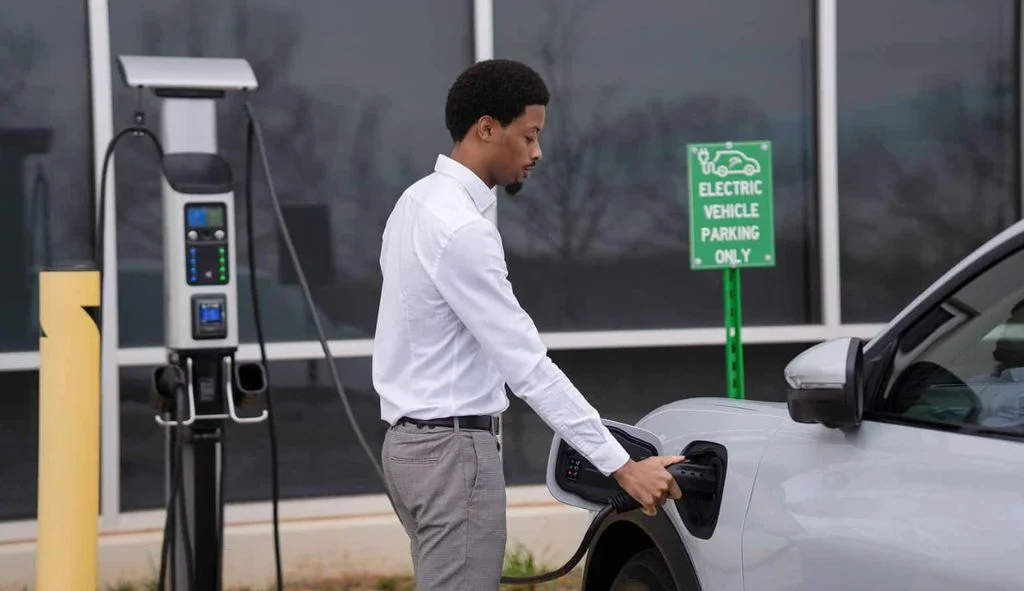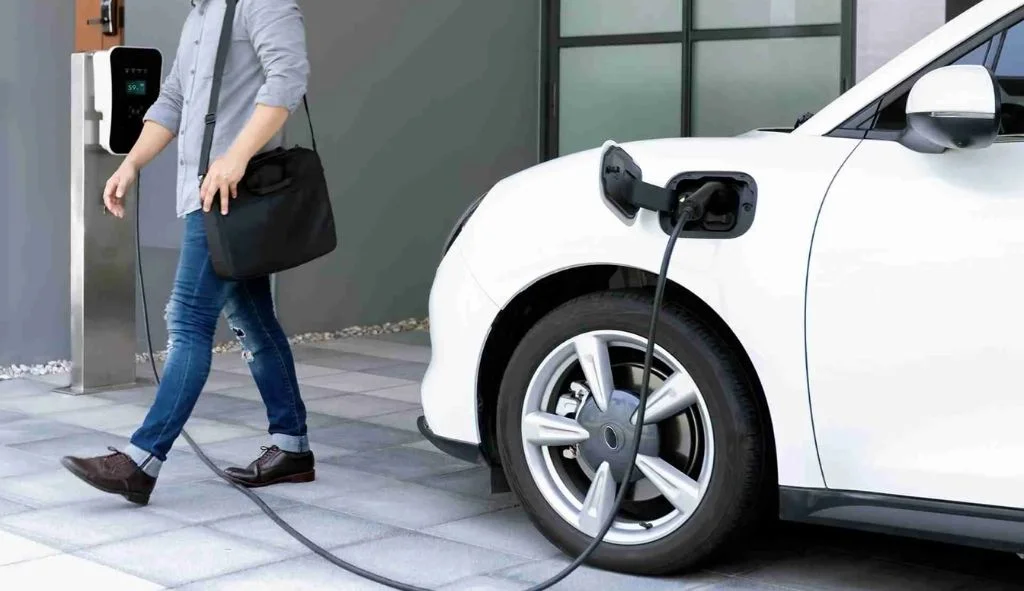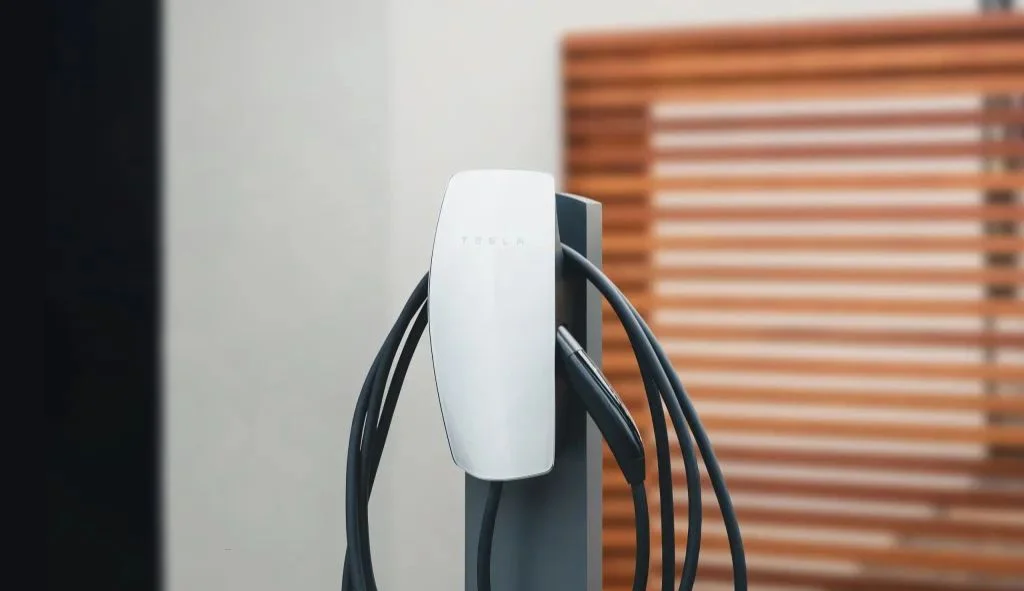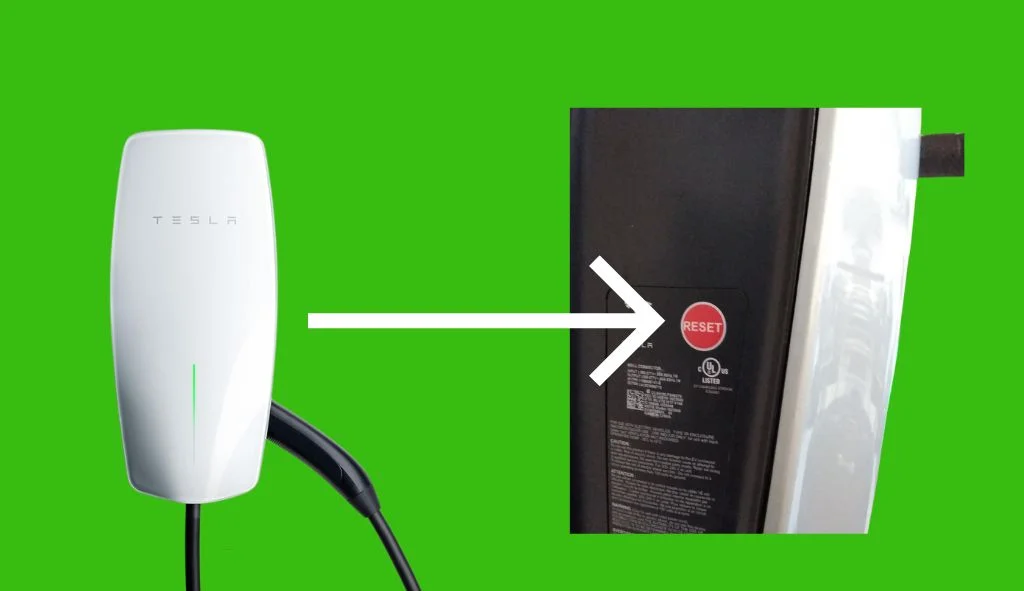
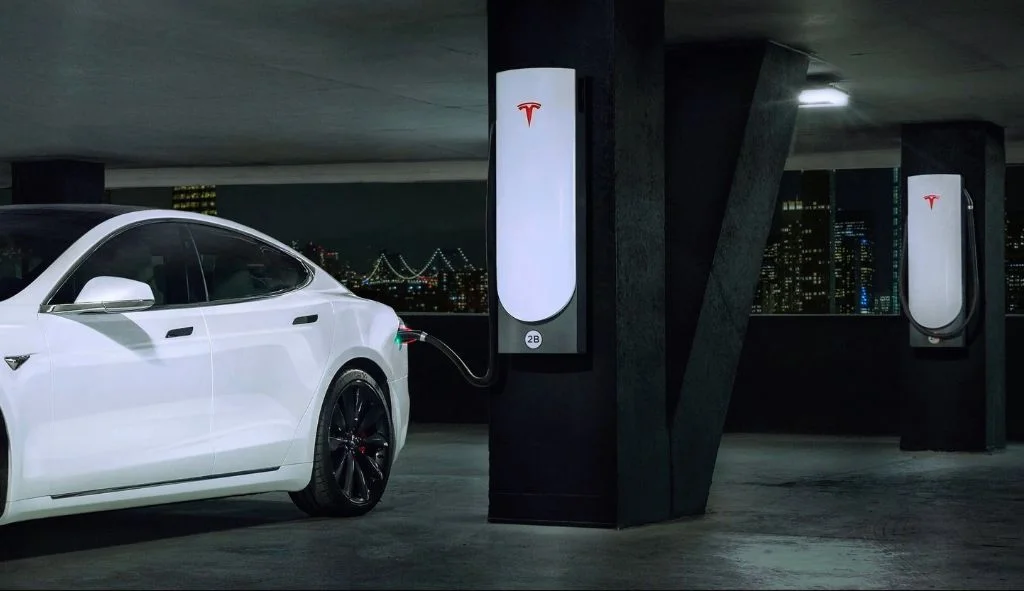
A Tesla destination charger is a Tesla Wall Connector installed at a hotel, restaurant, resort, shopping center or parking garage, so you can charge while you're there for a few hours or overnight. It's Level 2 AC charging at up to 11.5 kW, about a twentieth of a Supercharger's peak, and it's often free for customers.
Tesla says there are over 40,000 Wall Connectors at Destination Charging locations as of October 2026. They show up in the car's charging map alongside Superchargers, which is where most of the confusion starts: the two look alike on the screen and behave very differently.
The hardware: a Wall Connector with a host
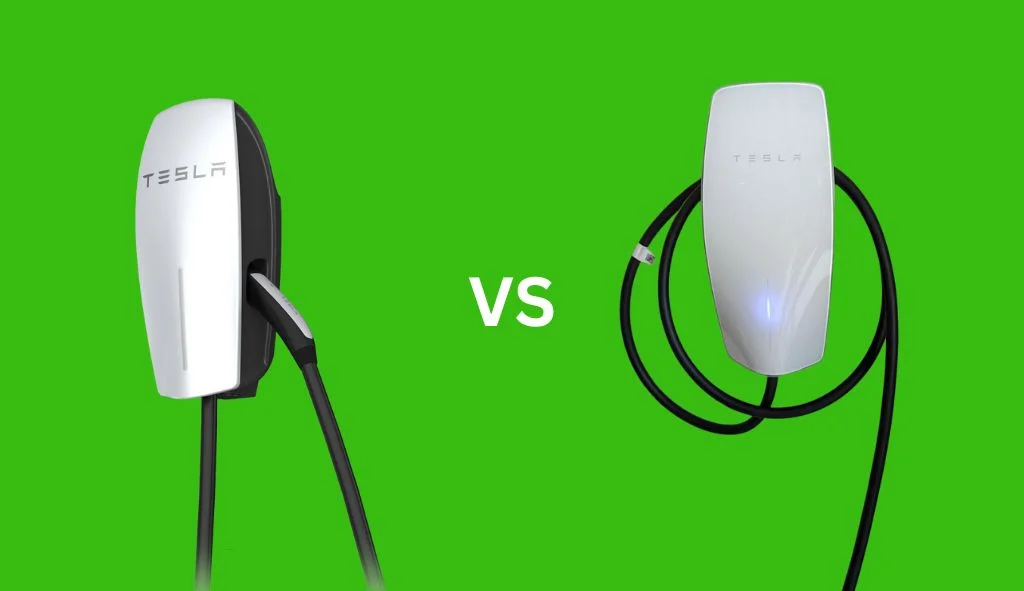
There's no special "destination" model. Sites use the same Gen 3 Wall Connector sold for homes, which tops out at 48 A and 11.5 kW on a 60 A circuit, and some older sites still have Gen 2 units. Tesla's sample host design shares two to three units on a single 208/240 V, 100 A breaker. Hosts whose installation quote meets Tesla's format can receive the Wall Connectors free.
That design detail explains most of the speed differences you'll see from one site to the next. More on that below.
If you already have a Wall Connector at home, you know exactly what to expect: same handle, same light bar, same speed at best. The Wall Connector spec sheet has the full hardware details.
How fast is a Tesla destination charger?
On a full 48 A connection at 240 V, Tesla's figures are:
| Vehicle | Max AC the car accepts | Range added per hour |
|---|---|---|
| Model 3 Long Range, Premium, Performance | 48 A / 11.5 kW | up to 44 mi |
| Model Y Long Range, Premium, Performance | 48 A / 11.5 kW | up to 44 mi |
| Model S | 48 A / 11.5 kW | up to 41 mi |
| Model X | 48 A / 11.5 kW | up to 35 mi |
| Cybertruck (Premium AWD) | 48 A / 11.5 kW | up to 30 mi |
| Base Model 3 and Model Y (RWD/Standard) | 32 A / 7.7 kW | up to 30 mi |
The car's onboard charger sets the ceiling. A base trim such as the 2026 Model Y Standard tops out at 32 A no matter what the wall unit offers, and an older Gen 2 destination unit set to 80 A still only delivers 48 A to any current Tesla. To see what your car accepts, tap the lightning bolt on the touchscreen while plugged in.

Why you rarely see the full 44 miles per hour
Three things pull the real number down, and you can't see any of them on the map:
- Shared circuits. On Tesla's sample design, two or three Wall Connectors share one 100 A breaker. Under the 125% rule for continuous loads, that breaker allows 80 A of charging in total, split between whoever is plugged in.
- 208 V supply. Hotels and office buildings often have 208 V rather than 240 V. At 48 A that's about 10 kW instead of 11.5 kW (48 x 208 = 9,984 W).
- Lower settings. A host can commission a unit for a smaller breaker. A 40 A breaker, for example, limits it to 32 A.
Here's the sharing arithmetic on a 240 V site:
| Cars plugged in | Current each | Power each | Model 3/Y range per hour |
|---|---|---|---|
| 1 | 48 A | 11.5 kW | up to 44 mi |
| 2 | 40 A | 9.6 kW | up to 37 mi |
| 3 | about 27 A | about 6.4 kW | roughly 25 mi |

So a hotel with three cars on one circuit gives each car a bit over half of the headline speed. Over a ten-hour night that's still roughly 250 miles of range for a Model 3, which is why the overnight use case works even on a crowded site. For a two-hour dinner on the same circuit, you'd get about 50 miles rather than 88. Our guide to Tesla charging times has the same math for home and Supercharger sessions.
Tesla destination charger vs Supercharger
They solve different problems. A Supercharger is a DC fast charger: it bypasses the car's onboard charger and feeds the battery at up to 250 kW (325 kW for Cybertruck at V4 sites), which Tesla quotes as up to 200 miles in 15 minutes. A destination charger is AC and limited by the onboard charger to 11.5 kW at most.
| Destination charger | Supercharger | |
|---|---|---|
| Current | AC, Level 2 | DC fast charging |
| Peak | 11.5 kW | 250 kW (325 kW Cybertruck, V4) |
| What you do while it charges | Sleep, eat, shop, work | Stretch, coffee, restroom |
| Pricing | Free or host-set; Tesla-billed sites per kWh | Per kWh where allowed, otherwise per minute; dynamic by site and time |
| Idle or congestion fees | Billed sites: $0.50 to $1.00 per minute when busy | Typically $0.50 per minute, up to $1.00, after a 5-minute grace period when busy |
| Who owns it | The host business (or Tesla at billed sites) | Tesla |

The practical rule on a road trip: Supercharge just enough to reach the hotel, then let the destination charger do the rest overnight. You spend less time sitting at a fast charger and often less money.
Are Tesla destination chargers free?
As of October 2026 there are two kinds of site, and the map pin tells you which you've found.
Host-run sites. The business owns the chargers and sets the rules. Many hotels and restaurants offer them free to guests and customers because the charging is a reason to choose them. Some may limit use to guests, valet parking or certain hours; parking garages may charge their usual parking fee with free electricity. Tesla doesn't guarantee that any host site is free.
Tesla-billed destination sites. Tesla's Destination Charging page for drivers describes sites billed per kWh through the Tesla app. The price, including taxes and fees, shows on the site's pin, it can change, and the invoice lands in your charging history. Some of these sites charge idle fees of $0.50 per minute, or $1.00 per minute when every stall is occupied. They only apply when the site is at least 50% occupied and are waived if you move within five minutes of finishing.
What a session costs, worked through
Say you need 150 miles in a Model 3. At about 261 Wh per mile including charging losses (our approximation from Tesla's own 48 A figures), that's roughly 39 kWh.
| Where you charge | Price used | Cost for 39 kWh |
|---|---|---|
| Free hotel destination charger | $0 | $0 |
| Home, US average residential rate | 18.31 cents/kWh (EIA, July 2026) | about $7.14 |
| Supercharger, typical member-level rate | about $0.434/kWh (DCFC Tracker, Oct 2026) | about $17 |
| Billed destination site | the price on the pin | 39 x pin price |
Supercharger prices vary by site and hour, so treat that row as a typical figure rather than a quote. For your own electricity rate, our cost to charge a Tesla guide runs the numbers by state.
Where to find Tesla destination chargers
- In the car. Open the charging map on the touchscreen. Destination sites are listed alongside Superchargers; pick one and navigation takes you to the property entrance.
- In the Tesla app. The app's charging map shows the same sites. Drivers of other EVs use "Charge Your EV" in the app to find billed sites they can use.
- On Tesla's Find Us map. Tesla's web map lets you browse locations before a trip.
- PlugShare. User check-ins there are the best way to learn whether a host-run charger is guests-only, broken or blocked.
Before you book a hotel for its charger, call and ask three things: how many units there are, whether they're for guests only, and whether you need to reserve one or use valet. A listing doesn't tell you if two of the three units are out of service.
Using one, start to finish
- Park so the cable reaches the charge port without stretching across another space.
- Plug in. At billed sites, Tesla drivers need a valid payment method in the app; the port light flashes green once charging starts.
- Set a charge limit in the car or app so the session ends on its own.
- Move the car when you're done, especially at shared sites where your session is slowing someone else's.
- Press the handle button and unplug. If the plug won't release, our guide to freeing a stuck charge cable walks through every fix.
When destination charging isn't the right answer
- You're short on range now. About 11 miles of range per 15 minutes is no help when you need to reach the next town. Go to a Supercharger.
- The site is full or iced. Gas cars parked in EV spaces happen often enough that a backup plan matters. A public J1772 post with the adapter in your car works too; see using public non-Tesla chargers.
- You drive a non-Tesla EV. You need a NACS port or a NACS-to-J1772 adapter, and host-run units may be set to Tesla vehicles only. Our page on Wall Connectors with other EVs explains the adapter side.
- You want this speed at home. The same unit costs $585 from the Tesla Shop as of October 2026, and our breaker size guide shows what circuit you need for the full 48 A.
What drivers ask about destination charging
Are Tesla destination chargers free?
Many are, but it isn't guaranteed. At host-run sites the business decides: hotels often include it for guests, restaurants for diners, and parking garages may charge their normal parking fee. Tesla also runs billed destination sites where you pay per kWh through the Tesla app, with the price shown on the site's map pin. Check the pin before you rely on free charging.
Do I have to be a guest to use a hotel's destination charger?
Often, yes. Many hotels reserve their chargers for guests, and some restrict them to valet parking or ask you to register at the front desk. The host can also limit a Wall Connector to certain vehicles through its access settings. If you're only stopping for a meal, call ahead or check recent comments on PlugShare before planning a route around it.
How long does a full charge take at a destination charger?
At 48 A, a Model 3 or Model Y with a 48 A onboard charger adds up to 44 miles of range per hour, so a typical overnight stay of eight to ten hours will take most Teslas from low to the charge limit you've set. Base trims capped at 32 A add up to 30 miles per hour. Shared circuits and 208 V supplies can stretch those times.
Can a non-Tesla EV use a Tesla destination charger?
At Tesla's billed destination sites, Tesla's support page says drivers of other EVs can start a session with the Tesla app (version 4.33 or later), an account, a payment method and a QR code scan on the charger. The car needs a NACS port or a NACS-to-J1772 adapter, because the handle is Tesla's connector. Host-run units may be set to Tesla vehicles only.
Is a destination charger the same as a Supercharger?
No. A destination charger is an AC Wall Connector, the same hardware as a home charger, peaking at 11.5 kW and relying on the car's onboard charger. A Supercharger is a DC fast charger that feeds the battery directly at up to 250 kW, or 325 kW for Cybertruck at V4 sites. One is for parking for hours, the other for a short stop on the road.
Are there idle fees at destination chargers?
At Tesla's billed destination sites, yes. Tesla lists $0.50 per minute, or $1.00 per minute when the site is fully occupied, charged only when the site is at least half full, and waived if you move within five minutes of finishing. Host-run free sites rarely bill idle time, but the host may tow or ticket cars that stay after charging.
Sources
- Destination Charging for drivers (Tesla support), tesla.com
- Destination Charging installation for businesses (Tesla), tesla.com
- Charging (Tesla support), tesla.com
- Wall Connector specifications and charge rates (Tesla), tesla.com
- Supercharging (Tesla support), tesla.com
- Electric Power Monthly, average retail price by sector (EIA), eia.gov
- Supercharger price report (DCFC Tracker), dcfctracker.com
Independent site. Not affiliated with or endorsed by Tesla, Inc. Tesla, Wall Connector and Supercharger are trademarks of Tesla, Inc.